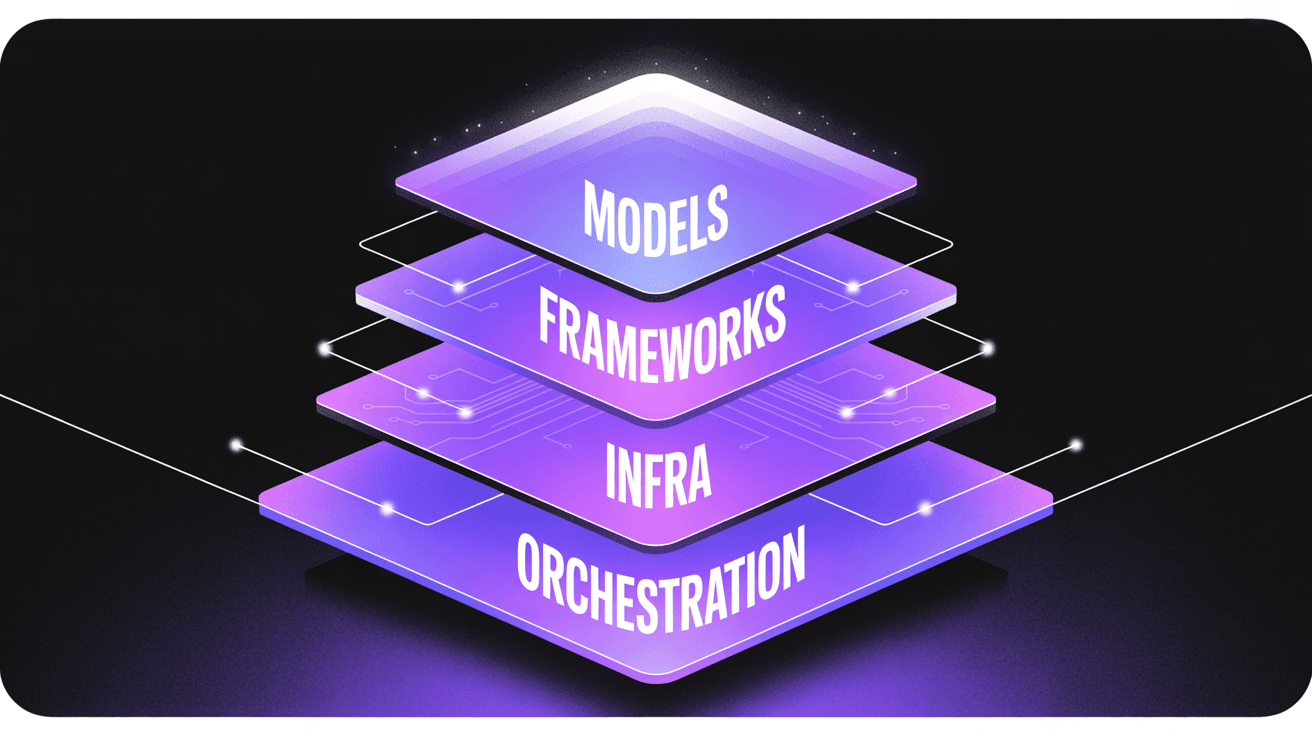
Die vier Schichten eines Enterprise-Agenten-Stacks
Jeder produktive KI-Agent, unabhaengig vom Anwendungsfall, sitzt auf einem Vier-Schichten-Stack. Diese Schichten zu verstehen -- und die Abhaengigkeiten zwischen ihnen -- ist der Unterschied zwischen einer Architektur, die skaliert, und einer, die nach sechs Monaten einen Neubau erfordert.
Schicht 1: Foundation Models. Die LLMs, die Schlussfolgern, Generierung und Entscheidungsfindung antreiben. Das ist die Schicht, die 80 % der Aufmerksamkeit bekommt und 20 % der architektonischen Komplexitaet darstellt. Die Modellauswahl ist wichtig, aber es ist die am leichtesten austauschbare Schicht -- der Wechsel von GPT-4o zu Claude erfordert Wochen an Prompt Engineering, nicht Monate an Umarchitekturierung.
Schicht 2: Orchestrierung. Die Frameworks, Protokolle und benutzerdefinierter Code, die das Agentenverhalten koordinieren: Tool-Aufrufe, Speicherverwaltung, Mehrschritt-Planung, Multi-Agent-Kommunikation und Workflow-Ausfuehrung. Das ist die Schicht, in der architektonische Entscheidungen die laengste Halbwertszeit haben. Eine schlechte Orchestrierungswahl erzeugt technische Schulden, die sich mit jeder neuen Faehigkeit potenzieren.
Schicht 3: Infrastruktur. Die Compute-, Speicher-, Netzwerk- und Datensysteme, auf denen der Agent laeuft: Kubernetes-Cluster, Vektordatenbanken, Message Queues, Caching-Schichten und GPU-Bereitstellung fuer feinabgestimmte Modelle. Diese Schicht bestimmt Ihre Kostenstruktur, Ihr Latenzprofil und Ihre Skalierbarkeitsobergrenze.
Schicht 4: Observability. Die Monitoring-, Logging-, Tracing- und Evaluierungssysteme, die Ihnen sagen, ob Ihr Agent korrekt funktioniert. Das ist die Schicht, die die meisten Teams zuletzt bauen und wuenschen, sie haetten sie zuerst gebaut. Ohne Observability fliegen Sie blind -- und in einem regulierten europaeischen Markt ist Blindflug nicht nur riskant, sondern nicht konform.
Die Schichten sind nicht unabhaengig. Ihre Modellauswahl beschraenkt Ihre Orchestrierungsoptionen (manche Frameworks arbeiten besser mit bestimmten Anbietern). Ihre Orchestrierungsarchitektur bestimmt Ihre Infrastrukturanforderungen (Multi-Agent-Systeme benoetigen andere Compute-Muster als Einzelagentensysteme). Ihre Infrastrukturwahlen beeinflussen, welche Observability moeglich ist (Serverless-Deployments erschweren verteiltes Tracing). Und Ihre Observability-Anforderungen wirken auf jede andere Schicht zurueck (wenn Sie vollstaendige Audit-Trails fuer die EU-KI-Verordnungs-Compliance benoetigen, beschraenkt das Ihre Modell-, Orchestrierungs- und Infrastrukturwahlen).
Die Stack-Entscheidungen, die wir in diesem Artikel durchgehen, spiegeln wider, was wir in der Produktion fuer Enterprise-Kunden in der Fertigung, Finanzdienstleistungen und SaaS deployen. Das sind keine theoretischen Empfehlungen -- sie sind das Ergebnis des Bauens, Betreibens und gelegentlichen Neubauens von Agentensystemen unter realen Produktionsbedingungen. Wo unsere Meinungen vom populaeren Konsens abweichen, erklaeren wir warum.
LLM-Auswahl: GPT-4o, Claude, Gemini, Mistral und Open Source
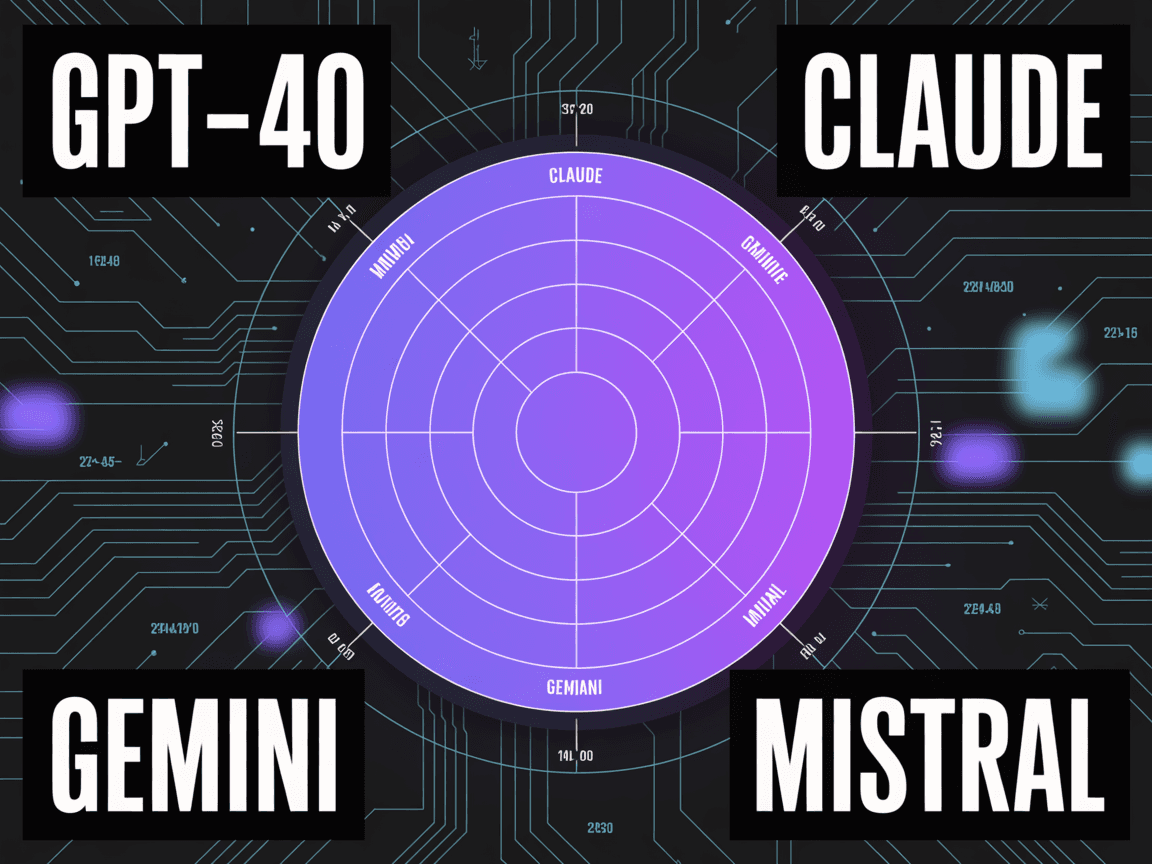
Die Modellauswahl ist die sichtbarste Stack-Entscheidung und paradoxerweise diejenige mit dem kuerzesten Bindungshorizont. LLM-Faehigkeiten verschieben sich alle 3-6 Monate, und ein gut architekturiertes System sollte das Modell innerhalb von Wochen wechseln koennen, nicht Monaten. Dennoch beeinflusst Ihre Standard-Modellwahl die Agentenqualitaet, Kosten und operative Muster erheblich.
Claude (Anthropic) ist unsere Standardempfehlung fuer komplexes Schlussfolgern, mehrstufige Agenten-Workflows und Aufgaben, die sorgfaeltige Befolgung von Anweisungen erfordern. Anfang 2026 fuehrt Claude Opus 4 in unseren internen Benchmarks fuer agentenspezifische Faehigkeiten: Tool-Calling-Genauigkeit (94,2 % in unserem Enterprise-Tool-Calling-Benchmark gegenueber 89,7 % fuer GPT-4o), Mehrschritt-Plan-Generierung (88 % Plan-Qualitaetswert gegenueber 82 % fuer GPT-4o) und Befolgung von Anweisungen ueber lange Systemprompts (kritisch fuer Agenten mit komplexen Geschaeftsregeln). Claudes 200K-Kontextfenster ermoeglicht RAG-Architekturen, die mehr Kontext einbeziehen, ohne Chunking-Kompromisse. Kosten: rund 15 USD pro Million Output-Token fuer Opus 4, 3,75 USD fuer Sonnet 4 -- Sonnet bewaeltigt 70-80 % der Produktivworkloads zu einem Bruchteil der Opus-Kosten.
GPT-4o (OpenAI) exzelliert bei hochvolumigen, strukturierten Aufgaben, wo Geschwindigkeit und Kosten mehr zaehlen als Schlussfolgerungstiefe. GPT-4os Latenzprofil -- mediane Time-to-First-Token von 320 ms gegenueber 480 ms fuer Claude Sonnet -- macht es zur besseren Wahl fuer nutzerseitige Interaktionen, wo wahrgenommene Reaktionsfaehigkeit zaehlt. Es fuehrt auch bei der Zuverlaessigkeit strukturierter Ausgaben: Wenn Sie vom Modell gueltiges JSON benoetigen, das einem bestimmten Schema entspricht, erreicht GPT-4os Structured-Output-Modus 99,4 % Schema-Compliance gegenueber 97,8 % fuer Claude. Fuer Agenten, die primaer klassifizieren, extrahieren und routen (statt zu schlussfolgern und zu generieren), bietet GPT-4o bei 2,50/10 USD pro Million Token (Input/Output) das beste Kosten-Leistungs-Verhaeltnis.
Gemini 2.0 (Google) hat den Faehigkeitsabstand signifikant geschlossen. Sein herausragendes Feature fuer Enterprise-Agenten ist die native multimodale Eingabe: Gemini verarbeitet Dokumente, Bilder und Video nativ, statt durch externe Vorverarbeitung. Fuer Agenten, die Rechnungen, Inspektionsfotos oder technische Zeichnungen analysieren muessen, reduziert Geminis multimodale Pipeline die architektonische Komplexitaet. Das 2M-Token-Kontextfenster ist nuetzlich fuer Codebases und grosse Dokumentanalysen. Allerdings hinken Geminis Tool-Calling-Genauigkeit (86,3 % in unserem Benchmark) und Befolgung von Anweisungen hinter Claude und GPT-4o zurueck, was es zu unserer dritten Wahl fuer allgemeine Agenten-Workloads macht.
Mistral Large und Mixtral (Mistral AI) nehmen eine einzigartige Position fuer europaeische Unternehmen ein. Mistral-Modelle koennen auf europaeischer Infrastruktur selbst gehostet werden, was der einzige Weg ist, echte Datensouveraenitaet fuer Agenten zu erreichen, die sensible Daten verarbeiten. Mistral Large 2 bietet Claude-vergleichbare Schlussfolgerungsqualitaet (innerhalb von 5-8 % in unseren Benchmarks) zu einem Bruchteil der Kosten bei Selbsthosting: rund 0,008 EUR pro 1K Token auf dedizierten GPU-Instanzen gegenueber 0,015 EUR pro 1K Token fuer Claude-API-Aufrufe. Der Trade-off ist operative Komplexitaet -- Sie sind nun fuer Model-Serving, Skalierung und Updates verantwortlich. Fuer Kunden in regulierten Branchen (Banking, Gesundheitswesen, oeffentlicher Sektor), in denen Daten unter keinen Umstaenden die europaeische Jurisdiktion verlassen duerfen, ist Mistral die einzige praktikable Option fuer Frontier-Qualitaets-Schlussfolgern.
Open-Source-Modelle (Llama 3.1 405B, Qwen 2.5, DeepSeek V3) erfuellen zwei Rollen in Enterprise-Stacks: Kostenoptimierung fuer hochvolumige, weniger komplexe Aufgaben (Klassifikation, Extraktion, Zusammenfassung) und Fine-Tuning fuer domaenenspezifische Faehigkeiten, die Allzweckmodelle schlecht handhaben. Wir verwenden Llama 3.1 70B fuer die sekundaere Validierung des Konfidenz-Scorings (die zweite Meinung in unserem konfidenzbasierten Eskalationsmuster) zu rund 80 % niedrigeren Kosten als die Verwendung eines Frontier-Modells fuer beide Durchlaeufe.
Unser Produktiv-Standard: Claude Sonnet fuer primaeres Agenten-Schlussfolgern, GPT-4o fuer strukturierte Extraktion und hochvolumiges Routing, Mistral fuer souveraene Deployment-Anforderungen und Llama 3.1 70B fuer kostensensitive sekundaere Aufgaben. Dieser Multi-Modell-Ansatz fuegt Orchestrierungskomplexitaet hinzu, reduziert aber die Kosten um 40-55 % gegenueber der Verwendung eines einzelnen Frontier-Modells fuer alles.
Frameworks: LangChain, LlamaIndex, CrewAI und AutoGen
Die KI-Agenten-Framework-Landschaft 2026 ist reif genug, um nuetzlich zu sein, und chaotisch genug, um gefaehrlich zu sein. Jedes Framework loest reale Probleme. Jedes Framework erzeugt auch Probleme, die Sie ohne es nicht haetten. Der Schluessel liegt darin zu wissen, was man nutzt, was man ueberspringt und wann man etwas Eigenes baut.
LangChain ist das am weitesten verbreitete Agenten-Framework, und das aus gutem Grund: Es bietet eine umfassende Abstraktionsschicht fuer LLM-Interaktionen, Tool-Calling, Speicherverwaltung und Chain-Komposition. LangChain Expression Language (LCEL) und LangGraph (fuer zustandsbehaftete, mehrstufige Agenten-Workflows) repraesentieren echte Engineering-Qualitaet. Wo LangChain bei Enterprise-Deployments Schwaechen zeigt, ist Abstraktionsgewicht und Upgrade-Fragilitaet. Das Framework ist so gewachsen, dass es so viele Faehigkeiten umfasst, dass das Verstaendnis dessen, was unter der Haube passiert, tiefe Vertrautheit mit der Codebasis erfordert. Wenn etwas kaputtgeht -- und in der Produktion geht etwas kaputt -- fuegt das Debugging durch mehrere Abstraktionsschichten erhebliche Incident-Response-Zeit hinzu. Zusaetzlich bedeutet LangChains schnelles Entwicklungstempo, dass Versionsupgrades haeufig Codeaenderungen erfordern, was eine Wartungslast fuer Teams erzeugt, die keinen Ingenieur fuer Framework-Tracking abstellen koennen.
Unser Urteil: LangChain ist hervorragend fuer Prototyping und fuer Teams, die ihren ersten Agenten bauen. Fuer produktive Enterprise-Systeme verwenden Sie LangGraph fuer die Workflow-Orchestrierung (es ist die ausgereifteste zustandsbehaftete Agenten-Ausfuehrungsengine verfuegbar), umgehen aber die LangChain-Abstraktionsschicht fuer direkte LLM-Interaktionen.
LlamaIndex begann als RAG-Framework und hat sich zu einer breiteren Agenten-Plattform erweitert. Seine Staerken liegen praezise in der RAG-Domaene: Dokumentenaufnahme, Chunking-Strategien, Embedding-Verwaltung und Retrieval-Pipeline-Optimierung. LlamaIndexs Query-Engine-Abstraktionen sind die besten verfuegbaren fuer den Bau produktiver RAG-Systeme. Wo es schwaecher ist: allgemeine Agenten-Orchestrierung und Multi-Agent-Koordination. LlamaIndex-Agenten fuehlen sich eher angeschraubt als nativ im Framework-Design.
Unser Urteil: Verwenden Sie LlamaIndex fuer RAG-Pipeline-Konstruktion und Retrieval-Optimierung. Verwenden Sie es nicht als primaeres Agenten-Orchestrierungs-Framework.
CrewAI ist das am staerksten meinungsgesteuerte Multi-Agent-Framework. Es bietet rollenbasierte Agentendefinitionen, Delegierungsmuster und kollaborative Workflows out of the box. Fuer Anwendungsfaelle, die sauber auf eine Team-aus-Agenten-Metapher abbilden (Recherche-Agent + Analyse-Agent + Schreib-Agent, oder Triage-Agent + Spezialist-Agent + Review-Agent), reduziert CrewAI die Time-to-Prototype um 60-70 % gegenueber dem Bau von Multi-Agent-Systemen von Grund auf. Die Einschraenkung ist gleichzeitig seine Staerke: CrewAIs Meinungen darueber, wie Agenten zusammenarbeiten sollten, stimmen nicht immer mit Enterprise-Anforderungen ueberein. Die Anpassung von Delegierungslogik, das Hinzufuegen von Genehmigungs-Workflows oder die Implementierung von Human-in-the-Loop-Mustern erfordert die Arbeit gegen das Framework statt mit ihm.
Unser Urteil: Starke Wahl fuer interne Tools und weniger kritische Multi-Agent-Workflows. Fuer produktive Enterprise-Agenten mit komplexen Aufsichtsanforderungen uebersteigen die Anpassungskosten oft den initialen Produktivitaetsgewinn.
AutoGen (Microsoft) fokussiert auf Multi-Agent-Konversationsmuster und ist mit AutoGen 0.4 signifikant gereift. Seine einzigartige Staerke ist das konversationszentrierte Programmiermodell, bei dem Agentenverhalten aus strukturierten Konversationen zwischen Agenten emergiert, statt aus explizitem Orchestrierungscode. Das macht bestimmte Muster -- Debatte, Kritik, iterative Verfeinerung -- natuerlich zu implementieren. Der Trade-off ist, dass nicht-konversationelle Muster (sequentielle Workflows, parallele Ausfuehrung, bedingte Verzweigung) in AutoGens Modell unnatuerlich wirken.
Unser Urteil: Stark fuer Recherche- und Analyseagenten, bei denen iterative Verfeinerung das Kernmuster ist. Weniger geeignet fuer operative Agenten, die strukturierte Workflows ausfuehren.
Unsere Empfehlung fuer die Enterprise-Produktion: Benutzerdefinierte Orchestrierung mit selektivem Framework-Einsatz. Wir bauen Agenten-Orchestrierung mit einem leichtgewichtigen benutzerdefinierten Framework, das Workflow-Ausfuehrung, Zustandsverwaltung und Human-in-the-Loop-Routing handhabt. Fuer spezifische Faehigkeiten integrieren wir Framework-Komponenten: LangGraph fuer komplexe zustandsbehaftete Workflows, LlamaIndex fuer RAG-Pipelines und direkte LLM-API-Aufrufe fuer alles andere. Dieser Ansatz erfordert mehr initiale Engineering-Investition (2-3 Wochen gegenueber 1 Woche fuer einen Full-Framework-Ansatz), eliminiert aber die Framework-Wartungslast und bietet volle Kontrolle ueber das Produktivverhalten.
Vektordatenbanken: Pinecone, Weaviate, Qdrant und pgvector
Wenn Ihr Agent Retrieval-Augmented Generation verwendet -- und die meisten Enterprise-Agenten tun das -- brauchen Sie eine Vektordatenbank. Der Vektordatenbank-Markt hat sich genug konsolidiert, dass es vier solide Optionen fuer Produktivdeployments gibt, jede mit unterschiedlichen operativen Charakteristiken.
Pinecone ist die vollstaendig verwaltete Option. Sie laden Vektoren hoch, Sie fragen Vektoren ab, Pinecone kuemmert sich um den Rest: Skalierung, Replikation, Indizierung und Verfuegbarkeit. Das ist seine Staerke und seine Einschraenkung. Staerke: null operativer Overhead, 99,95 % Uptime-SLA, Sub-50ms p95-Abfragelatenz im Scale. Einschraenkung: Ihre Daten liegen auf Pinecones Infrastruktur (US-basiert), was Datensouveraenitaets-Bedenken fuer europaeische Unternehmen erzeugt, die sensible Daten verarbeiten. Pinecones Preisgestaltung -- 0,096 USD pro GB Storage pro Stunde fuer den Standard-Plan -- wird im Scale teuer: ein 10M-Vektor-Index mit 1536 Dimensionen kostet rund 2.400 EUR/Monat. Fuer Teams, die operative Einfachheit priorisieren und keine Datenresidenz-Einschraenkungen haben, ist Pinecone eine solide Wahl.
Weaviate bietet sowohl verwaltete Cloud- als auch selbst gehostete Deployment-Optionen. Sein herausragendes Feature ist native Hybridsuche: die Kombination von Vektorsimilaritaetssuche mit Keyword-Suche (BM25) in einer einzigen Abfrage. Fuer Enterprise-RAG-Anwendungen, bei denen Nutzer manchmal nach exakter Terminologie und manchmal nach semantischer Bedeutung suchen, verbessert die Hybridsuche die Retrieval-Qualitaet um 15-25 % gegenueber reiner Vektorsuche. Weaviates Modul-Oekosystem (fuer automatische Vektorisierung, Fragenbeantwortung und generative Suche) reduziert Boilerplate-Code. Die operative Komplexitaet ist moderat fuer selbst gehostete Deployments -- Weaviate laeuft gut auf Kubernetes, erfordert aber Tuning fuer Produktivworkloads. Kosten fuer Selbsthosting: rund 800-1.500 EUR/Monat auf Cloud-Infrastruktur fuer ein 10M-Vektor-Deployment.
Qdrant ist unsere haeufigste Empfehlung fuer Enterprise-Deployments. In Rust geschrieben, liefert es die beste rohe Abfrage-Performance in unseren Benchmarks: 40 % schnellere p99-Latenz als Weaviate und 25 % schneller als Pinecone bei ueber 10M Vektoren. Qdrant unterstuetzt fortgeschrittenes Filtern (Vektorsimilaritaet mit Metadatenfiltern in einer einzigen Abfrage kombinieren, ohne Post-Filtering-Performance-Verschlechterung), Quantisierung (Speicherverbrauch um 4-8x reduzieren bei minimaler Genauigkeitseinbusse) und Mandantenfaehigkeit (essenziell fuer SaaS-Produkte, bei denen die Daten jedes Kunden isoliert sein muessen). Selbst gehostetes Qdrant auf europaeischer Infrastruktur erfuellt Datensouveraenitaets-Anforderungen. Cloud-gehostetes Qdrant (Qdrant Cloud) bietet eine verwaltete Option mit europaeischer Regionsverfuegbarkeit. Kosten: rund 600-1.200 EUR/Monat fuer ein selbst gehostetes 10M-Vektor-Deployment, was es zur kosteneffizientesten dedizierten Vektordatenbank-Option macht.
pgvector ist die Option fuer Teams, die vermeiden wollen, eine weitere Datenbank zu ihrem Stack hinzuzufuegen. Als PostgreSQL-Erweiterung ermoeglicht pgvector die Speicherung und Abfrage von Vektoren neben Ihren relationalen Daten in derselben Datenbank. Fuer Anwendungen mit moderaten Vektorsuchanforderungen (unter 5M Vektoren, Sub-200ms Latenztoleranz) liefert pgvector adaequate Performance bei null zusaetzlicher operativer Komplexitaet. Die Trade-offs werden bei Skalierung deutlich: pgvectors HNSW-Index-Performance verschlechtert sich steiler als dedizierte Vektordatenbanken ueber 5M Vektoren, und es fehlen fortgeschrittene Features wie Quantisierung, dynamische Index-Updates und native Hybridsuche.
Unser Urteil: pgvector fuer einfachere Anwendungsfaelle und Teams, die minimale Infrastrukturkomplexitaet wollen. Qdrant fuer Produktivdeployments, die Performance, Filtering und europaeisches Hosting benoetigen. Weaviate, wenn Hybridsuche eine harte Anforderung ist. Pinecone, wenn operative Einfachheit alles andere ueberwiegt und Datenresidenz kein Thema ist.
Ein architektonischer Hinweis: Unabhaengig davon, welche Vektordatenbank Sie waehlen, koppeln Sie Ihre Agentenlogik nicht eng an die API der Vektordatenbank. Bauen Sie eine Abstraktionsschicht, die Embedding-Generierung, Speicherung und Retrieval hinter einer sauberen Schnittstelle kapselt. Wir haben Kunden in den letzten 18 Monaten dreimal zwischen Vektordatenbanken migriert, als sich Anforderungen weiterentwickelten, und jede Migration war in unter einer Woche abgeschlossen, weil die Integrationsflaeche gut abgegrenzt war.
Orchestrierungsprotokolle: MCP, A2A und ACP
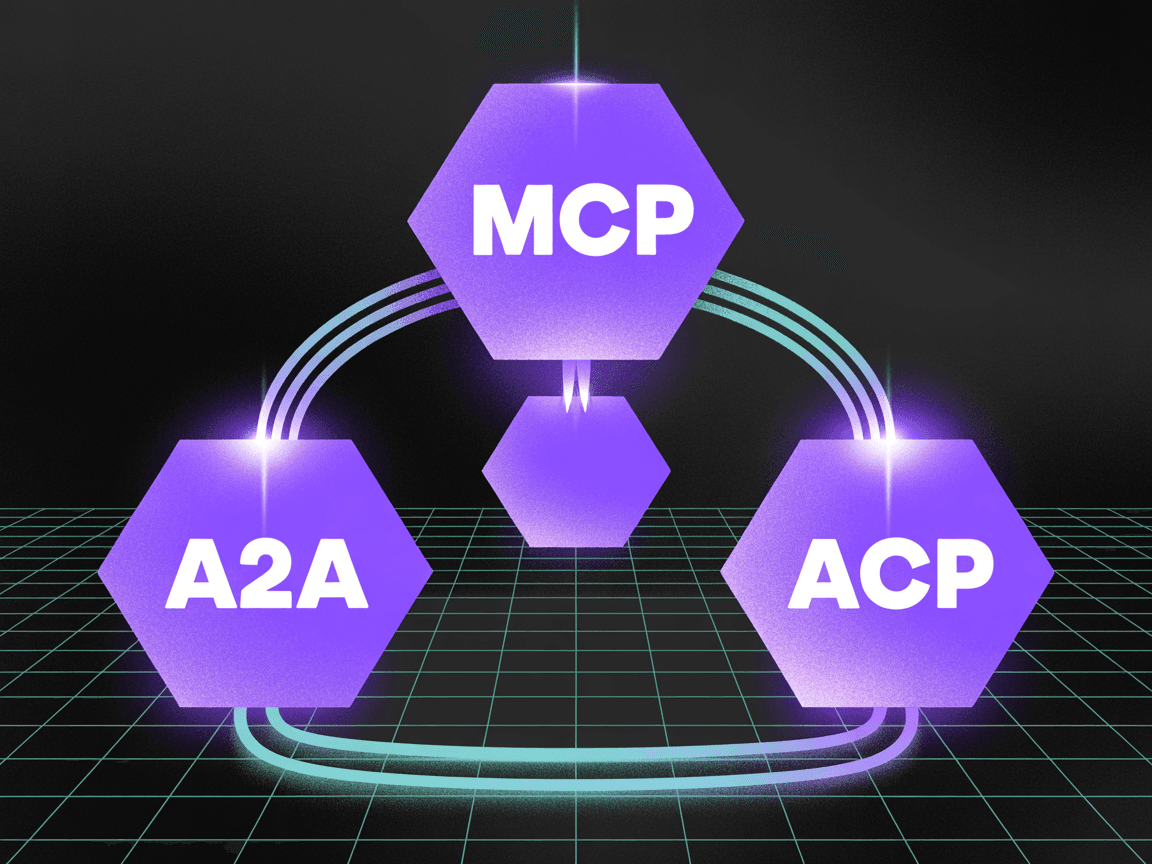
2025-2026 hat die Entstehung standardisierter Protokolle fuer Agentenkommunikation und Tool-Integration gesehen. Diese Protokolle adressieren ein reales Problem: Ohne Standards ist jede Agent-zu-Tool- und Agent-zu-Agent-Integration eine benutzerdefinierte Implementierung, die eine exponentielle Wartungslast erzeugt, wenn Agentensysteme wachsen. Drei Protokolle haben bedeutende Traktion gewonnen.
Model Context Protocol (MCP), entwickelt von Anthropic und jetzt ein offener Standard, standardisiert, wie KI-Agenten sich mit externen Datenquellen und Tools verbinden. MCP definiert eine Client-Server-Architektur, in der der Agent (Client) Tools entdeckt und aufruft, die von MCP-Servern exponiert werden. Jeder Server bietet ein typisiertes Interface, das seine Faehigkeiten beschreibt -- verfuegbare Tools, ihre Parameter und erwartete Rueckgabetypen --, was dem Agenten ermoeglicht, neue Tools dynamisch zu entdecken und zu nutzen, ohne Codeaenderungen.
MCP loest das Tool-Integrationsproblem elegant. Statt eine benutzerdefinierte Integration fuer jedes Tool zu bauen, das Ihr Agent benoetigt, bauen (oder adoptieren) Sie MCP-Server fuer jedes Tool, und jeder MCP-kompatible Agent kann sie nutzen. Das Oekosystem ist schnell gewachsen: Anfang 2026 gibt es produktionsreife MCP-Server fuer grosse Enterprise-Systeme einschliesslich Salesforce, Slack, GitHub, PostgreSQL und Dateisystemzugriff, mit Community-beigesteuerten Servern, die Hunderte weitere Tools abdecken.
Der praktische Impact auf Enterprise-Deployments ist erheblich. Ein Kunde, der zuvor 3 Wochen fuer den Bau einer benutzerdefinierten Salesforce-Integration fuer seinen Agenten aufwendete, deployed nun einen MCP-Server in 2 Tagen und erhaelt eine standardisierte, gut getestete Integration mit korrekter Authentifizierung, Rate-Limiting und Fehlerbehandlung. Wenn spaeter derselbe Agent mit Jira verbunden werden muss, fuegt er einen weiteren MCP-Server hinzu, ohne die Kernlogik des Agenten zu beruehren.
Agent-to-Agent Protocol (A2A), initiiert von Google, adressiert ein anderes Problem: Wie kommunizieren Agenten aus verschiedenen Systemen miteinander? In einer Multi-Agent-Architektur, in der spezialisierte Agenten verschiedene Domaenen bearbeiten (ein Agent fuer Kundendaten, ein anderer fuer Finanzverarbeitung, ein dritter fuer Compliance-Pruefung), bietet A2A einen Standard fuer Agenten, um die Faehigkeiten des jeweils anderen zu entdecken, Aufgaben zu verhandeln und Ergebnisse auszutauschen. A2As Agent-Card-Konzept -- eine standardisierte Beschreibung der Faehigkeiten, Authentifizierungsanforderungen und Kommunikationspraeferenzen eines Agenten -- ermoeglicht dynamische Agentenkomposition.
A2A ist konzeptionell ueberzeugend, aber frueher in der Produktionsreife als MCP. Die Spezifikation ist stabil, aber das Oekosystem produktionsreifer Implementierungen ist duenner. Wir beobachten A2A genau und haben interne Prototypen gebaut, aber wir haben A2A noch nicht in einem kundenorientierten Produktivsystem deployed. Der wahrscheinlichste erste Produktiv-Anwendungsfall: die Kommunikation der Agenten unserer Kunden mit den Agenten ihrer Lieferanten und Partner fuer organisationsuebergreifende Workflow-Automatisierung.
Agent Communication Protocol (ACP), gefuehrt von IBM und der Linux Foundation, verfolgt einen anderen architektonischen Ansatz als A2A. Waehrend A2A auf direkte Agent-zu-Agent-Kommunikation fokussiert, fuehrt ACP ein Message-Broker-Muster mit zentralisiertem Routing, Nachrichtenpersistenz und Workflow-Orchestrierung ein. ACP ist gut geeignet fuer Enterprise-Umgebungen, die bereits nachrichtenorientierte Middleware (Kafka, RabbitMQ) nutzen und wollen, dass die Agentenkommunikation vertrauten Enterprise-Integrationsmustern folgt.
ACPs Staerken -- Nachrichtenhaltbarkeit, garantierte Zustellung, zentrales Auditing -- passen gut zu Enterprise-Anforderungen, insbesondere fuer regulierte Branchen, die vollstaendige Audit-Trails der Inter-Agent-Kommunikation benoetigen. Allerdings fuegt der Overhead eines Message Brokers Latenz hinzu (50-200 ms pro Hop), was ACP fuer Echtzeit-Agenten-Interaktionen weniger geeignet macht.
Unsere Empfehlung: MCP jetzt adoptieren, A2A und ACP beobachten. MCP bietet sofortigen, konkreten Wert fuer Tool-Integration mit einem reifen Oekosystem. Bauen Sie die Tool-Schicht Ihres Agenten auf MCP-Servern auf, und Sie bekommen heute Standardisierung, Wiederverwendbarkeit und Oekosystem-Hebelwirkung. Fuer Agent-zu-Agent-Kommunikation verwenden Sie vorerst direkte Integrationsmuster (gRPC, REST), mit einer Architektur, die A2A oder ACP adoptieren kann, wenn die Oekosysteme reifen -- voraussichtlich Mitte bis Ende 2026.
Infrastruktur: Kubernetes, Serverless und GPU-Bereitstellung
Infrastrukturentscheidungen fuer Agenten bestimmen Ihre Kostenstruktur, Ihr Latenzprofil und Ihre Skalierbarkeitsobergrenze. Das richtige Infrastrukturmuster haengt von den Workload-Charakteristiken Ihres Agenten ab: Anfragevolumen, Latenzanforderungen, Rechenintensitaet und Zustandsverwaltungsbedarf.
Kubernetes-basierte Container-Orchestrierung ist unser Standard fuer produktive Enterprise-Agenten. Agenten sind zustandsbehaftete, langlebige Prozesse, die Konversationskontext pflegen, Tool-Verbindungen verwalten und mehrstufige Workflows koordinieren. Kubernetes bietet die Orchestrierungs-Primitive -- Deployments, Services, Persistent Volumes, Horizontal Pod Autoscaler --, die natuerlich auf Agenten-Deployment-Muster abbilden. Wir deployen Agenten-Workloads auf Kubernetes-Clustern, die auf europaeischer Cloud-Infrastruktur gehostet werden (typischerweise Hetzner Cloud, OVHcloud oder AWS Frankfurt Region je nach Kundenanforderungen), unter Verwendung von Helm Charts fuer standardisiertes Deployment und ArgoCD fuer GitOps-basierte Continuous Delivery.
Die spezifische Kubernetes-Architektur fuer Agenten unterscheidet sich in mehreren Punkten von traditionellen Web-Application-Deployments. Agenten-Pods erfordern hoehere Speicherzuweisung (2-4 GB pro Pod gegenueber 256-512 MB fuer typische Web-Services), weil sie In-Memory-Konversationsstatus, Embedding-Caches und Tool-Verbindungspools pflegen. Horizontale Skalierung muss Session-Affinitaet beruecksichtigen -- eine laufende Agenten-Konversation muss zum selben Pod geroutet werden, was Sticky Sessions oder externalisierten Zustandsmanagement erfordert. Health Checks muessen agentenspezifisch sein -- ein Pod, der auf HTTP-Ebene gesund ist, aber seine LLM-API-Verbindung oder Vektordatenbank-Verbindung verloren hat, ist nicht wirklich gesund.
Serverless-Architekturen (AWS Lambda, Google Cloud Run, Azure Container Apps) funktionieren fuer spezifische Agenten-Muster: kurzlebige, zustandslose Agenten-Aufrufe, die eine einzelne Anfrage verarbeiten und terminieren. Ereignisgesteuerte Agenten -- ausgeloest durch eingehende E-Mails, Webhook-Events oder geplante Aufgaben -- passen gut zum Serverless-Modell. Der Kostenvorteil ist erheblich fuer Burst-Workloads: Sie zahlen nur fuer die Ausfuehrungszeit statt ungenutzte Kapazitaet vorzuhalten. Ein Dokumentenverarbeitungsagent, der 500 Mal pro Tag bei durchschnittlich 30 Sekunden Ausfuehrungszeit laeuft, kostet rund 45 EUR/Monat auf Cloud Run gegenueber 200 EUR/Monat fuer einen dedizierten Kubernetes-Pod.
Die Einschraenkung von Serverless fuer Agenten ist Cold-Start-Latenz (1-5 Sekunden fuer Container-basiertes Serverless) und die Komplexitaet der Zustandsverwaltung ueber Aufrufe hinweg. Fuer konversationelle Agenten oder Mehrschritt-Workflow-Agenten erfordert Serverless externes Zustandsmanagement (Redis, DynamoDB), das architektonische Komplexitaet und Latenz hinzufuegt. Unser Muster: Kubernetes fuer primaere Agenten-Workloads und Serverless fuer Hilfsfunktionen (geplante Datenverarbeitung, ereignisgesteuerte Anreicherung, Batch-Operationen).
GPU-Bereitstellung wird relevant, wenn Ihr Stack feinabgestimmte Modelle, On-Premise-LLM-Hosting oder rechenintensive Vorverarbeitung (Dokumenten-OCR, Bildanalyse) umfasst. Die GPU-Infrastruktur-Landschaft in Europa ist beschraenkt: NVIDIA A100 und H100 Verfuegbarkeit bei europaeischen Cloud-Anbietern ist limitiert und teuer (2,50-4,00 EUR/Stunde fuer H100-Instanzen). Wir managen GPU-Kosten durch drei Strategien: Spot/Preemptible-Instanzen fuer Fine-Tuning-Workloads (60-70 % Kostenreduktion mit dem Trade-off moeglicher Unterbrechung), reservierte Kapazitaet fuer Produktiv-Inferenz (20-30 % Rabatt bei verbindlicher Nutzung) und Modellquantisierung, die GPU-Speicheranforderungen um 50-75 % reduziert bei 2-5 % Qualitaetsverlust (akzeptabel fuer die meisten Produktiv-Workloads).
Fuer Kunden, die Mistral- oder Llama-Modelle on-premise fuer Datensouveraenitaet deployen, sind die GPU-Infrastrukturkosten der dominante Posten. Eine einzelne produktive Mistral-Large-Instanz, die 100 gleichzeitige Anfragen bedient, erfordert mindestens 2x H100 GPUs: rund 6.000-8.000 EUR/Monat an Cloud-GPU-Kosten oder 60.000-80.000 EUR an Hardware fuer On-Premise-Deployment (mit 18-24 Monaten Payback gegenueber Cloud). Die TCO-Analyse fuer souveraene Deployments muss diese Infrastrukturpraemie beruecksichtigen.
Auto-Scaling-Strategie fuer Agenten-Workloads unterscheidet sich von Web-Application-Skalierung. Web-Applikationen skalieren nach HTTP-Anfragevolumen. Agenten muessen nach einer zusammengesetzten Metrik skalieren: aktive Konversationsanzahl (speichergebunden), LLM-API-Aufrufrate (externe Abhaengigkeit-gebunden) und Tool-Ausfuehrungs-Concurrency (IO-gebunden). Wir implementieren benutzerdefinierte Kubernetes-Metrics-Adapter, die diese zusammengesetzten Signale in den Horizontal Pod Autoscaler einspeisen und Skalierungsentscheidungen ermoeglichen, die den tatsaechlichen Agenten-Ressourcenverbrauch widerspiegeln statt Proxy-Metriken.
Observability: Die AgentOps-Tool-Landschaft
Agenten-Observability ist nicht Application Performance Monitoring mit anderem Namen. Traditionelles APM verfolgt Anfrage-Latenz, Fehlerraten und Durchsatz. Agenten-Observability muss all das verfolgen plus: die Qualitaet der Agenten-Ausgaben, die Genauigkeit der Tool-Aufrufe, die Relevanz des abgerufenen Kontexts, die Kosten jedes Agentenlaufs und die Drift des Modellverhaltens ueber die Zeit. Das ist ein fundamental anderes Observability-Problem, und es erfordert zweckgebaute Werkzeuge.
LangSmith (LangChain) ist die ausgereifteste agentenspezifische Observability-Plattform. Es bietet End-to-End-Tracing von Agentenlaeufen (vom Nutzereingabe ueber LLM-Aufrufe, Tool-Aufrufe bis zur finalen Ausgabe), Dataset-Management fuer Evaluierung und Annotations-Workflows fuer menschliche Ueberpruefung. Das Tracing ist wirklich exzellent -- Sie koennen von einem uebergeordneten Agentenlauf in einzelne LLM-Aufrufe bohren, exakte Prompts und Completions sehen, Latenz an jedem Schritt messen und Token-Verbrauch verfolgen. LangSmith funktioniert mit jedem LLM und jedem Framework, nicht nur LangChain. Kosten: rund 400 USD/Monat fuer ein Team von 5 mit produktivem Tracing-Volumen. Einschraenkung: LangSmiths Evaluierungs-Framework ist funktional, aber weniger flexibel als dedizierte Evaluierungstools fuer benutzerdefinierte Metriken.
Arize Phoenix fokussiert auf den ML-Observability-Aspekt: Embedding-Drift-Erkennung, Retrieval-Qualitaetsanalyse und Modell-Performance-Monitoring. Fuer RAG-intensive Agenten ist Arizes Faehigkeit, Embedding-Raum-Drift ueber die Zeit zu visualisieren und mit Retrieval-Qualitaetsverschlechterung zu korrelieren, unschaetzbar. Wenn die Antworten Ihres Agenten schlechter werden, hilft Arize zu bestimmen, ob das Problem Modellverschlechterung, Retrieval-Qualitaetsabfall oder Datenverteilungsverschiebung ist -- drei verschiedene Probleme mit drei verschiedenen Loesungen. Das Open-Source-Angebot Phoenix bietet Kernfunktionalitaet kostenfrei; die verwaltete Arize-Plattform fuegt Zusammenarbeitsfeatures und Aufbewahrung hinzu.
Weights & Biases (W&B) ist der Standard fuer Experiment-Tracking und Modell-Evaluierung. Im Agenten-Kontext exzelliert W&B bei systematischer Prompt-Evaluierung: Testen von Prompt-Varianten gegen Evaluierungsdatensaetze, Verfolgen von Qualitaetsmetriken ueber Prompt-Versionen und Verwalten des Prompt-Engineering-Lebenszyklus. Fuer Teams, die Prompt Engineering als disziplinierten Optimierungsprozess behandeln (was alle Produktivteams tun sollten), bietet W&B die Infrastruktur, um Experimente durchzufuehren, Ergebnisse zu vergleichen und Verbesserungen mit Zuversicht auszurollen. Kosten: 50-200 EUR/Monat pro Nutzer je nach Plan.
Benutzerdefinierte Observability-Loesungen fuellen die Luecken zwischen zweckgebauten Tools und Enterprise-Anforderungen. Jedes Produktivdeployment, das wir betreuen, umfasst benutzerdefinierte Observability-Komponenten fuer: Kostenzuordnung (Verfolgung des LLM-API-Aufwands pro Kunde, pro Anwendungsfall, pro Agent -- kritisch fuer SaaS-Unternehmen, die ihre Unit Economics verstehen muessen), Business-Metrik-Korrelation (Verbindung von Agenten-Performance-Metriken mit Geschaeftsergebnissen wie CSAT, Loesungsrate oder Umsatz-Impact) und Compliance-Logging (Generierung der Audit-Trails, die die EU-KI-Verordnung erfordert und die kein Standard-Tool vollstaendig abdeckt).
Unser Produktiv-Observability-Stack kombiniert alle vier Ebenen: LangSmith fuer operatives Tracing und Debugging, Arize Phoenix fuer Drift-Erkennung und Retrieval-Qualitaets-Monitoring, W&B fuer Prompt-Evaluierung und Experiment-Management, und benutzerdefinierte Dashboards (gebaut auf Grafana mit Prometheus-Metriken) fuer Kostenzuordnung und Business-Metrik-Korrelation. Die Compliance-Logging-Schicht schreibt in einen unveraenderlichen Event-Store (Append-only PostgreSQL mit Row-Level-Security), der Audit-Trail-Anforderungen erfuellt.
Was ueberwacht werden sollte -- die essenziellen Metriken fuer Enterprise-Agenten:
- Latenz: End-to-End-Antwortzeit, Time-to-First-Token, LLM-Aufruf-Latenz, Tool-Ausfuehrungs-Latenz. Setzen Sie SLOs pro Anwendungsfall (Sub-3-Sekunden fuer interaktiv, Sub-30-Sekunden fuer asynchron).
- Token-Verbrauch und Kosten: Pro Anfrage, pro Nutzer, pro Anwendungsfall. Verfolgen Sie Trends, um Prompt-Aufblaehung oder unnoetige Wiederholungsabfragen zu erkennen.
- Genauigkeit: Aufgabenabschlussrate, Tool-Aufruf-Erfolgsrate, Konfidenzwert-Kalibrierung. Woechentlich gegen goldene Evaluierungsdatensaetze messen.
- Drift: Embedding-Verteilungsverschiebung, Ausgabeverteilungsaenderung, Konfidenzwert-Verteilungsaenderung. Alarmieren bei statistisch signifikanter Drift.
- Nutzerzufriedenheit: CSAT, Daumen-hoch/runter bei Agenten-Antworten, Eskalationsrate, Aufgabenabbruchrate.
- Kosten pro Loesung: Gesamte Agentenkosten (LLM + Infrastruktur + Tools) geteilt durch erfolgreich abgeschlossene Aufgaben. Das ist Ihre Unit-Economics-Metrik.
Unsere dezidierten Empfehlungen fuer 2026
Nach zwei Jahren des Bauens, Deployens und Betreibens von Enterprise-KI-Agenten ist hier der Stack, den wir fuer die meisten Produktivdeployments 2026 empfehlen. Das sind keine theoretischen Praeferenzen -- es sind die Technologien, zu denen wir greifen, wenn ein neues Kundenengagement beginnt, praxiserprobt in der Fertigung, Finanzdienstleistungen, SaaS und Professional Services.
Foundation Models: Claude Sonnet (primaer) + GPT-4o (strukturierte Aufgaben) + Mistral Large (souveraen). Claude Sonnet bewaeltigt 70-80 % der Agenten-Workloads: Schlussfolgern, Planung, Tool-Calling und Inhaltsgenerierung. GPT-4o uebernimmt strukturierte Extraktion, Klassifikation und hochvolumiges Routing, wo Latenz zaehlt. Mistral Large bedient Kunden mit strikten Datensouveraenitaets-Anforderungen. Wir pflegen Modell-Abstraktionsschichten, die den Wechsel innerhalb von Stunden ermoeglichen, nicht Tagen.
Orchestrierung: Benutzerdefiniertes leichtgewichtiges Framework + LangGraph fuer komplexe Workflows + MCP fuer Tool-Integration. Unser benutzerdefiniertes Framework handhabt Request-Routing, Zustandsverwaltung, Konfidenz-Scoring und Human-in-the-Loop-Muster. LangGraph orchestriert komplexe mehrstufige Workflows mit bedingter Verzweigung und paralleler Ausfuehrung. MCP-Server bieten standardisierte Tool-Integrationen. Wir vermeiden tiefe Abhaengigkeiten von einer einzelnen Bibliothek.
Vektordatenbank: Qdrant (Standard) oder pgvector (einfache Anwendungsfaelle). Qdrant fuer jedes Deployment, das Sub-100ms-Retrieval, fortgeschrittenes Filtering oder Mandantenfaehigkeit erfordert. pgvector fuer Prototypen und Produktivsysteme, in denen Vektorsuche ein sekundaeres Feature ist und das Team die Infrastrukturkomplexitaet minimieren will. Beide unterstuetzen europaeisches Hosting.
Infrastruktur: Kubernetes auf europaeischen Cloud-Anbietern. Hetzner Cloud fuer kostenoptimierte Deployments (60-70 % guenstiger als Hyperscaler fuer aequivalente Rechenleistung). AWS Frankfurt fuer Kunden, die spezifische AWS-Services oder bestehende AWS-Enterprise-Agreements benoetigen. OVHcloud fuer franzoesische Kunden mit Sovereign-Cloud-Anforderungen. ArgoCD fuer GitOps-Deployment. Prometheus + Grafana fuer Infrastruktur-Monitoring.
Observability: LangSmith + Arize Phoenix + benutzerdefinierte Dashboards. LangSmith fuer operatives Tracing und Debugging. Arize fuer Drift-Erkennung und Retrieval-Qualitaet. Benutzerdefinierte Grafana-Dashboards fuer Kostenzuordnung, Business-Metriken und Compliance-Logging. W&B fuer Prompt-Engineering-Experimente waehrend Entwicklungs- und Optimierungsphasen.
Wo wir bis Ende 2026 Veraenderungen erwarten:
Die Modellauswahl wird sich verschieben. Anthropic, OpenAI und Google entwickeln alle agentenspezifische Modellfaehigkeiten (besseres Tool-Calling, laengerer zuverlaessiger Kontext, verbesserte Planung). Der Abstand zwischen Frontier-Modellen und Open Source verengt sich: Llama 4 und Mistrals naechste Generation werden wahrscheinlich fuer 80 % der Enterprise-Agenten-Aufgaben wettbewerbsfaehig sein, was das Kostenargument fuer API-basierte Modelle reduziert.
MCP wird zur Standard-Tool-Integrationsschicht. Wir erwarten, dass 90 % der Enterprise-SaaS-Produkte bis Ende 2026 MCP-Server anbieten, was Tool-Integration zu einer Konfigurationsaufgabe statt einem Engineering-Projekt macht. A2A-Adoption wird ernsthaft beginnen fuer organisationsuebergreifende Agenten-Workflows.
Agentenative Observability wird konsolidieren. Die aktuelle Landschaft von ueber 15 spezialisierten Tools wird auf 3-4 umfassende Plattformen konsolidieren. LangSmith und Arize sind am besten positioniert, um zu ueberleben.
Infrastrukturkosten werden um 30-40 % sinken, da der Wettbewerb im europaeischen Cloud-GPU-Markt zunimmt und Modelleffizienzverbesserungen (Quantisierung, Destillation, Speculative Decoding) den Rechenaufwand pro Agenten-Interaktion reduzieren.
Die Teams, die heute flexible, modulare Stacks bauen -- mit klaren Abstraktionsgrenzen zwischen den Schichten --, werden am besten positioniert sein, diese Verbesserungen zu adoptieren, wenn sie reifen. Die Teams, die stark auf ein einzelnes Framework oder einen einzelnen Anbieter setzen, werden teure Migrationen erleben. Architektonische Flexibilitaet ist in einem Markt, der sich so schnell bewegt, kein Luxus -- sie ist eine Ueberlebensanforderung.
Fuer eine detaillierte Bewertung, wie diese Stack-Empfehlungen auf Ihren spezifischen Anwendungsfall und Ihre Einschraenkungen zutreffen, kontaktieren Sie unser Engineering-Team fuer ein kostenloses Architektur-Review.